 |
fotos de animales silvestres de
ARGENTINA |
 |
|
www.fotosaves.com.ar - Alec Earnshaw |
 |
||
photos of wild animals of ARGENTINA |
|||


Actualizado / Updated: 09-2019
|
Aves - Birds
PASSERIFORMES - FURNARIIDAE Horneros, canasteros, pijuís, pajonaleras - Horneros, canasteros, spinetails, reedhaunters |
 |
FAMILIA ANTERIOR
|
PRÓXIMA
FAMILIA
|
 |
||
|
PREVIOUS FAMILY
|
NEXT FAMILY
|
 |
Orden:
Order: |
Passeriformes
|
Familia:
Family: |
Furnariidae
|
Horneros, canasteros, pijuís
Horneros, canasteros, spinetails |
| El Hornero es el Ave Nacional de Argentina y miembro destacado de la familia de los Furnaridos. Si buscas fotos de Hornero, solo tienes que marcar en la foto a la derecha y te llevará a las muchas fotos de esta especie. | 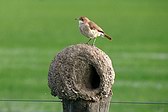 |
The Rufous Hornero is the National Bird of Argentina. If you are looking for photos of this species please click on the photo on the left and it will take you right there. |
Dada la cantidad de especies de Furnáridos, he dividido al grupo de acuerdo a la nueva filogenia, que resulta de estudios de ADN. La nueva clasificación (aún debatida y que se puede hallar en otros sitios organizada de otras maeras) consta de: - - - Subfamilia Sclerurinae - Camineras y raspahojas - - - - Subfamilia Dendrocolaptinae - Trepadores y Chincheros - - - Subfamilia Philydorinae - - - Subfamilia Furnariinae - - - Subfamilia Synallaxinae |
Due to the number of species, I've divided the group according to modern phylogeny that arise from genetic studies. The new classification (still debated and which can be found in other sites presented in various ways) consists of: - - - Subfamily Sclerurinae - Miners and Leaftossers - - - Subfamily Dendrocolaptinae - Woodcreepers - - - Subfamily Philydorinae - - - Subfamily Furnariinae - - - Subfamily Synallaxinae |
SUBFAMILIAS de la familia FURNARIIDAE |
SUB-FAMILIES of the FURNARIIDAE family |
|
 |
Sclerurinae Camineras, Raspahojas ESPECIES: 5 de las 7 presentes en Argentina 38 fotos: Raspahojas (1), Caminera Colorada (16), Caminera Puneña (2), Caminera Común (7), Caminera Patagónica (9) |
Sclerurinae Miners, Leaftossers SPECIES: 5 out of 7 present in Argentina 38 photos: Rufous-breasted Leaftosser (1), Rufous-banded Miner (16), Puna Miner (2), Common Miner (7), Short-billed Miner (9) |
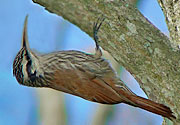 |
Dendrocolaptinae Picapalos, Trepadores, Chincheros ESPECIES: 10 de las 12 presentes en Argentina 77 fotos: Tarefero (7), Arapasú (2), Trepador Oscuro (5), Trepador Colorado (2), Trepador Garganta Blanca (1), Trepador Gigante (2), Chinchero Enano (2), Chinchero Chico (31), Chinchero Grande (23); Picapalo Oscuro (2) |
Dendrocolaptinae Scythebills, Woodcreepers SPECIES: 10 out of 12 present in Argentina 77 photos: Olivaceous Woodcreeper (7), Plain-brown Woodcreeper (2), Planalto Woodcreeper (5), Black-banded Woodcreeper (2), White-throated Woodcreeper (1), Great Rufous Woodcreeper (2), Lesser Woodcreeper (2), Narrow-billed Woodcreeper (31), Scimitar-billed Woodcreeper (23), Black-billed Scythebill (2) |
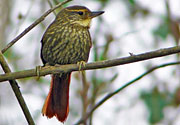 |
Philydorinae Ticoticos, Picoleznas, algunas Bandurritas ESPECIES: 9 de las12 presentes en Argentina 65 fotos: Ticotico Cabeza Negra (2), Ticotico Grande (3), Ticotico Ocráceo (1), Ticotico Común (8), Ticotico Ojo Blanco (2), Picolezna Rojizo (3), Picolezna Patagónico (18), Bandurrita Pico Recto (5), Bandurrita Patagónica (23) |
Philydorinae Foliage-gleaners, Treerunners, some Earthcreepers SPECIES: 9 out of 12 present in Argentina 65 photos: Black-capped Foliage-gleaner (2), Buff-fronted Folieage-gleaner (3), Ochre-breasted Foliage-gleaner (1), Buff-browed Foliage-gleaner (8), White-eyed Foliage-gleaner (2), Streaked Xenops (3), White-throated Treerunner (18), Straight-billed Earthcreeper (5), Band-tailed Earthcreeper (23) |
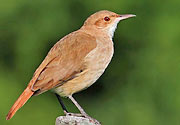 |
Furnariinae Hornero, Remolineras, Bandurritas, etc. ESPECIES: 13 de las 17 presentes en Argentina 247 fotos: Hornero (72), Hornerito Copetón (5), Bandurrita Chaqueña (11), Pajonalera Pico Curvo (34), Macuquito (9), Junquero (22), Remolinera Común (35), Remolinera Andina (4), Remolinera Araucana (29), Remolinera Chica (13), Remolinera Castaña (1), Bandurrita Común (7), Bandurrita Andina (5) |
Furnariinae Horneros, Cinclodes, Earthcreepers, etc. SPECIES: 13 out of 17 present in Argentina 247 photos: Rufous Hornero (72), Crested Hornero (5), Chaco Earthcreeper (11), Curve-billed Reedhaunter (34), Sharp-tailed Streamcreeper (9), Wren-like Rushbird (22), Buff-winged Cinclodes (35), Cream-winged Cinclodes (4), Dark-bellied Cinclodes (29), Gray-flanked Cinclodes (13), White-winged Cinclodes (1), Scale-throated Earthcreeper (7), Buff-breasted Earthcreeper (5) |
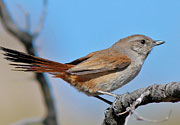 |
Synallaxinae Pijuís, Espineros, Canasteros, etc. ESPECIES: 38 de las 43 presentes en Argentina 546 fotos: Rayadito (22), Coludito Canela (1), Coludito Copetón (22), Coludito Cola Negra (11), Coludito Quebradeño (3), Espinero Frente Rojiza (4), Espinero Andino (3), Espinero Chico (13), Espinero Serrano (4), Espinero Pecho Manchado (38), Espinero Grande (14), Crestudo (18), Leñatero (32), Cacholote Castaño (22), Cacholote Pardo (10), Canastero Patagónico (18), Canastero Castaño (2), Canastero Chaqueño (26), Canastero Coludo (28), Canastero Pálido (9), Canastero Rojizo (10), Espartillero Pampeano (9), Espartillero Austral (4), Espartillero Enano (12), Pijuí Plomizo (22), Pijuí Negruzco (1), Pijuí Frente Gris (14), Pijuí Cola Parda (16), Pijuí Corona Rojiza (3), Pijuí Ceja Canela (2), Pijuí Canela (3), Chotoy (27), Curutié Colorado (35), Curutié Blanco (16), Curutié Oliváceo (1), Curutié Ocráceo (32), Pajonalera Pico Recto (30), Colilargo (10) |
Synallaxinae Spinetails, Thornbirds, Canasteros, etc. SPECIES: 38 out of 43 present in Argentina 546 photos: Thorn-tailed Rayadito (22), Brown-capped Tit-Spinetail (1), Tufted Tit-Spinetail (22), Pallid Tit-Spinetail (11), Rufous-fronted Thornbird (4), Streak-fronted Thornbird (3), Little Thornbird (13), Spot-breasted Thornbird (4), Freckle-breasted Thornbird (38), Greater Thornbird (14), Lark-like Brushrunner (18), Firewood-gatherer (32), Brown Cacholote (22), White-throated Cacholote (10), Patagonian Canastero (18), Steinbach's Canastero (2), Short-billed Canastero (26), Sharp-billed Canastero (28), Cordilleran Canastero (9), Creamy-breasted Canastero (10), Hudson's Canastero (9), Austral Canastero (4), Bay-capped Wren-Spinetail (12), Spixi's Spinetail (22), Gray-bellied Spinetail (1), Sooty-fronted Spinetail (14), Pale-breasted Spinetail (16), Rufous-capped Spinetail (3), Azara's Spinetail (2), Ochre-cheeked Spinetail (3), Chotoy Spinetail (27), Yellow-chinned Spinetail (35), Stripe-crowned Spinetail (16), Olive Spinetail (1), Sulphur-throated Spinetail (32), Striaght-billed Reedhaunter (30), Des Murs's Wiretail (10) |
ACERCA DE LA FAMILIA DE FURNÁRIDOS |
ABOUT THE FURNARID FAMILY |
|
Los
Furnaridos son un grupo de diferentes especies de aves que comparten
algunas características comunes. A este complejo o "familia
de especies" se lo llama "Furnariidae" y es exclusiva
de Sudamérica. Comprende
más de 200 especies distintas, de las cuales más
de 70 de estas formas se hallan en Argentina. Se han especializado tal que hay furnáridos en todos los tipos de hábitats del continente. Una de las especies
de Furnaridos más conocidos es el Hornero, pues se lo ve en plazas,
jardines y quintas en Buenos Aires y por todo el Norte y Centro de Argentina.
Además es el Ave Nacional de Argentina. Todos los Furnáridos
tienen plumaje amarronado y algunas especies son similares entre si,
por lo que a veces resulta difícil identificarlos correctamente
a nivel de especie. Los nidos de los Furnariidae actuales son de construcción
muy diversa (ej.: hueco en árbol, hueco en la tierra,
nido globoso de palitos u otro material vegetal, y sin olvidar la
clásica casita de barro del Hornero) pero siempre son cerrados.
Es decir, el nido es globoso con una abertura para entrar y salir del
mismo, lo cual no es algo común entre las aves.
La nueva sistemática (u orden evolutivo) se basa en recientes estudios de ADN, citados abajo, que finalmente permiten reconstruir un árbol genealógico del grupo compuesto de 5 sub-grupos. Estos excelentes trabajos postulan una secuencia evolutiva de la familia. Las primeras especies de Furnaridos habitaban densos bosques y nidificaban en huecos naturales en los árboles que cubrían todo Sudamérica. Tras el surgimiento de la Cordillera de los Andes hace 40 millones de años, gradualmente se perdieron los bosques y aparecieron hábitats mucho más áridos y semidesérticos (como la puna, el monte árido que se extiende desde Catamarca hasta La Pampa, la estepa patagónica, etc.) y otras áreas abiertas también sin árboles como los pastizales pampeanos y humedales (Iberá), etc. En este escenario los Furnáridos tuvieron que "agudizar el ingenio" y adaptar su forma de nidificación para poder sobrevivir. Se produjo entonces una "radiación adaptativa": el surgimiento gradual de nuevas formas (nuevas especies) especializadas (valga la redundancia!) y que desarrollaron un notable abanico de técnicas constructivas de sus nidos, lo que les permitió sobrevivir en cada uno de estos hábitats. Pero siempre fieles a un precepto: que los nidos fueran cerrados. Por otro lado, mirando el árbol genealógico notaremos una clara tendencia: las especies terminales (las de aparición más reciente) de cada rama son siempre adaptadas a habitats más despojados de árbles (es el caso de las 2 pajonaleras, que por otro lado no estan emparentadas como se creía, ya que pertenecen a distintas ramas) mientras que las especies a la cabeza de algunas ramas viven en bosques densos. Esta especialización y dependencia de hábitat hace que hoy muchas especies de la familia se encuentren con problemas para subsistir, y se acercan gradualmente a la extinción, pues los desmontes, los cultivos en zonas áridas y otros cambios al paisaje impuestos por el hombre en todas partes están borrando de la faz de la tierra a aquello que les sirvió de hogar a lo largo de millones de años de evolución. ¡No pueden vivir fuera de ellos, y no pueden evolucionar en 5 años, ni en 50 ni en 500! Por eso, si eres dueño de un bosque o bosquecito de árboles nativos (como espinillo, ñandubay, calden, jarilla, tala, por nombrar sólo algunos), o selvas, montes bajos, arbustales áridos, estepa patagónica, pastizal natural, costas de laguna, pajonales, etc. - en rigor, casi cualquier hábitat natural - piensa en los furnáridos... y cuída ese hábitat - por más que el lugar parezca inservible ¡Por favor, no dejes que estos hábitats se consuman! Mira en esta página las especies de aves que soporta tu lugar, y luego piensa cómo hacer para conservarlo. Ten especial atención en lo siguiente: si te acercas a un pajonal a las 11 de la mañana quizás no veas ni oigas nada, y te llevarás la falsa impresión de que "aquí nada vive". Pero acercate al mismo lugar al amanecer y verás la magnífica diversidad de cantos que se oyen. Esos son lo pájaros que no se dejan ver, pero ESTAN! Agradezco a los autores de las 2 increíbles monografías citadas abajo. AE |
The
Furnarids are a bird family - a group of species that share
a common ancestry. They are to be found only in South &
Central America. There are over 200 different species of Furnarids,
of which over 70 are listed for Argentina and found in every
kind of habitat. Feather colors combine rufous, browns and
greys. Many are habitat specialists and can be very secretive and hard to identify in the field - therefore knowing the calls
is most helpful. Another common feature is that their nests are always
enclosed. However, the nest construction technique and materials
used to build such structures vary enormously between species, ranging
from hollows in trees, mud banks or under rocks, globular nests built
of twigs and placed inside bushes, on trees or on posts; others are
made of reeds or grasses. And let us not forget the remarkable soccer-ball
sized "clay oven" built by the Horneros. |
| 1)
Evolution of the ovenbird-woodcreeper assemblage (Aves: Furnariidae) –
major shifts in nest architecture and adaptive radiation. Martin Irestedt, Jon Fjeldsa and Per G. P. Ericson - Journal of Avian Biology, 2006 2) Philogeny of the Ovenbird genus Upucerthia: a case of independent adaptations for terrestrial life. Jon Fjeldsa, Martin Irestedt, Knud A. Jønsson, Jan I. Ohlsson & Per G. P. Ericson - Zoologica Scripta 2007 |
|