![]() |
fotos
de animales silvestres de
ARGENTINA
|
![]() |
||
|
|
||||
|
photos
of wild animals of ARGENTINA
|
||||
|
Aves -Birds
SPHENISCIFORMES Pingüinos - Penguins |
|
-
|
-
|
PRÓXIMO
ORDEN
|
|||
|
-
|
NEXT ORDER
|
| TABLA DE ESPECIES - La siguiente tabla lista las especies representadas con fotos en esta página. Pulsa en el link a la derecha de cada especie para acceder rápidamente, o baja para mirar todas las fotos. | SPECIES TABLE -The following table lists the species with photos in this page. Click on the link to the right of each species to access the photos quickly, or scroll down to see them all. |
|
FAMILIA
|
Nombre
Español
|
English
Name
|
Scientif.
|
Link
|
|
SPHENISCIDAE
|
||||
| Pingüino
Patagónico |
Magellanic Penguin | Spheniscus magellanicus | ||
| Pingüino
de Vincha |
Gentoo Penguin | Pygoscelis papua | ||
![]() |
Orden:
Order: |
Sphenisciformes
|
Familia:
Family: |
Spheniscidae
|
Pingüinos
Penguins |
|
Pingüino
Patagónico
ESPECIE GLOBALMENTE AMENAZADA Estado de Conservación según Birdlife International: |
Magellanic
Penguin
GLOBALLY THREATENED SPECIES Conservation Status by Birdlife International: |
|
CASI
AMENAZADA
|
x
|
NEAR
THREATENED
|
|
VULNERABLE
|
-
|
VULNERABLE
|
|
EN
PELIGRO
|
-
|
ENDANGERED
|
|
EN
PELIGRO CRITICO
|
-
|
CRITICALLY
ENDANGERED
|
|
Pingüino Patagónico
Spheniscus magellanicus Magellanic Penguin En diversos lugares de a costa patagóniaca / At different sites along the patagonian coast |
|
Camarones,
Chubut - 2/2003
Juvenil (3 meses de vida) Juvenile (3 months old) |
Camarones,
Chubut - 2/2003
Subadulto (1 año) Subadult (1 year old) |
Camarones,
Chubut - 2/2003
Adulto Adult |
|
|
|
|
Ciclo
de Vida Básico
|
Basic Life Cycle
|
|
Al
final del invierno (aprox. Septiembre) llegan los adultos a la
colonia. Las parejas, monógamas de por vida, se reencuentran
y preparan su nido. Copulan, la hembra pone los huevos y se turnan
empollando. Nacen los pichones y los adultos se turnan para cuidar
a los nacidos. El otro adulto se interna al mar para alimentarse
y traer alimento para los pichones, que es regurgitado. El juvenil
crece rápidamente. Inicialmente está cubierto de
un grueso plumón pardo, que luego pierde. Ya en Febrero
muestra su plumaje "juvenil", que presenta una única
banda parda y poco contrastada que cruza la parte superior del
pecho (foto
izquierda).
|
At
the end of each winter (aprox. September - remember this is in
the southern hemisphere) the adults return from the sea to their
colonies on the patagonian coast. The couples, which are monogamous
for life, reunite and refurbish their nests. They mate, the female
lays the eggs, and they take turns to incubate. After the chicks
are born the adults continue taking turns at the nest while the
other feeds at sea, returning with food for their young, which
is regurgitated. The juveniles are covered in a brownish down,
but they grow quickly and soon loose this. By February they show
their juvenile plumage, having one pale grayish-brown band accross
the upper breast (photo
above left).
|
|
Punta
Tombo, Prov. de Chubut - c. 1995
|
|
|
Punta Tombo es la colonia de nidificación más grande de esta especie, con más de 200.000 parejas El mar parece hervir con los pinguinos que entran y salen del mar. Los adultos se turnan en el nido, mientras la pareja sale al mar durante 2 o 3 días a conseguir el alimento (principalmente anchoita) para sí, como también para sus pichones. Al regresar a la playa emprenden una larga caminata hasta el sitio de su nido, pasando frente a los nidos de otras parejas, donde son hostigados por pichones que intentan provocar el regurgitado para "robar un bocado". |
Punta Tombo is the world's largest breeding colony of this species, with over 200,000 pairs The sea seems to "boil" as adults come and go from the ocean. Taking turns, one penguin stays at the nest while the other goes out for 2 to 3 days to get food (mainly anchovy) to feed himself and for its chicks. Once out of the water it makes its way walking to the nest, which can be a fair distance from the beach. On its way it passes by many other nests, where it encounters other chicks that harass the adult in their attempt to provoke it to regurgitate, and thus steal food that was not meant for them. |
|
Punta
Tombo, Chubut - c. 1999
|
||
|
|
|
|
Camarones,
Chubut - c. 1999
|
||
|
|
|
|
Camarones,
Chubut - 2/2006
Pinguinos de 1 año cambiando su plumaje - One-year olds molting |
||
|
|
|
|
Camarones,
Chubut - 2/2006
Izquierda: En Febrero las plumas tapizan el suelo de al colonia - Left: In February the discarded feathers cover the ground in the reserve. |
||
|
|
|
|
|
|
Isla
Martillo, Canal de Beagle, Tierra del Fuego - 2/2008
|
||
|
|
|
|
Punta
Medanosa, Santa Cruz - c. 1999
|
|
|
|
|
Punta
Medanosa, Santa Cruz - c. 1999
|
|
|
|
|
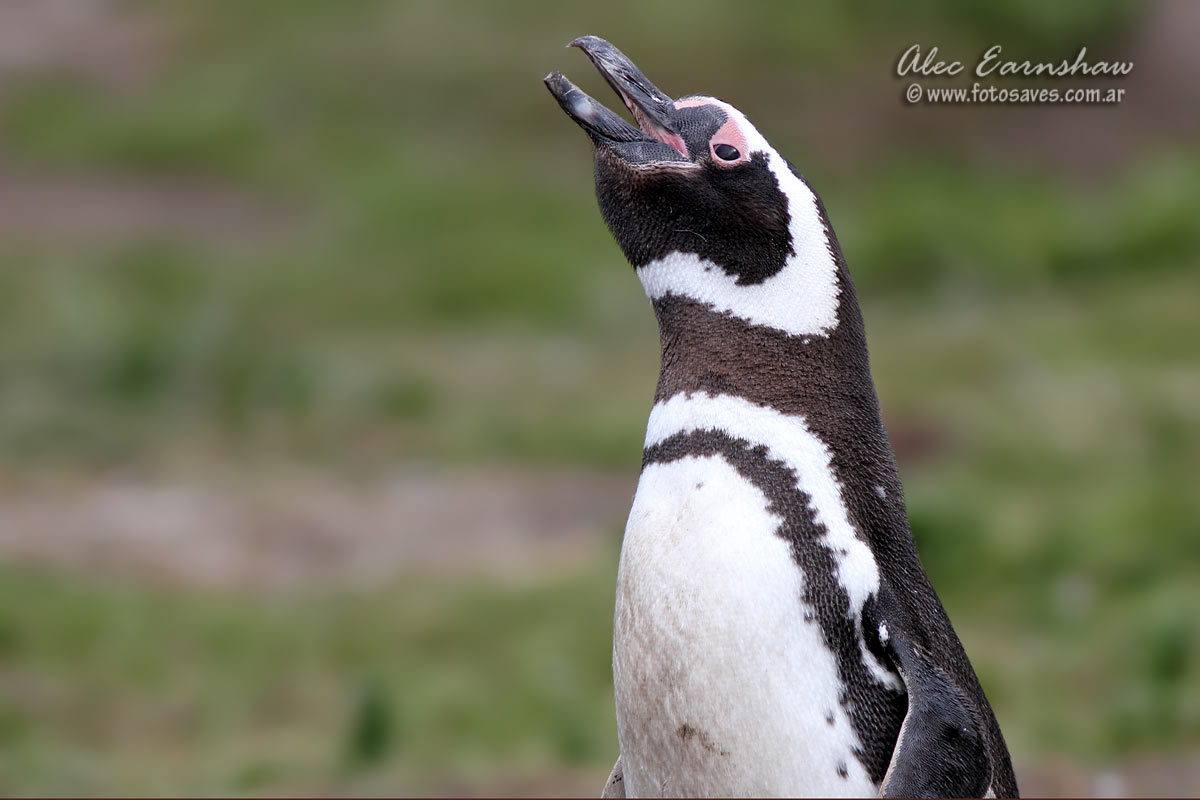
Sin embargo, es también un gesto emblemático, un símbolo de los problemas de subsistencia que enfrenta la especie en estos tiempos. El adulto parece estar reclamando la vuelta de su pareja con el alimento para la cría - y el relevo de su "turno" de niñero, permitiéndole regresar al mar para alimentarse.Debido a la sobrepesca la obtención del alimento es cada vez más escaza, obligando a los pinguinos padres a alejarse más de la costa, y por períodos cada vez más largos, arriesgando la vida de los pichones. Una pose similar fue elegida como emblema por la Fundación Patagonia Natural, la ONG que se ocupa de la conservación de la vida silvestre en Patagonia. Recientes censos indican que en 10 años se redujo la población de pingüinos en la colonia de Punta Tombo en un 35%. |
However, to me it also representa a symbolic posture - a sign of their plight for survival in these modern times. It would seem the adult is calling for the return of his mate back from the seas with food for the chicks - allowing him his own turn to return to the waters to dine. The call is a symbol of their struggle for subsistance, principally finding food, which overfishing is making more scarce by the day, forcing the birds to further out to sea, thus lengthening the shifts and risking the survival of the chicks. A similar pose was chosen as the emblem of the Fundación Patagonia Natural, the NGO that works towards the conservation of the wildlife of Patagonia. A recent census shows the number of Penguins in the Punta Tombo colony has reduced by 35% over the last 10 years. |
|
|
Pingüino
de Vincha
ESPECIE GLOBALMENTE AMENAZADA Estado de Conservación según Birdlife International: |
Gentoo
Penguin
GLOBALLY THREATENED SPECIES Conservation Status by Birdlife International: |
|
CASI
AMENAZADA
|
x
|
NEAR
THREATENED
|
|
VULNERABLE
|
-
|
VULNERABLE
|
|
EN
PELIGRO
|
-
|
ENDANGERED
|
|
EN
PELIGRO CRITICO
|
-
|
CRITICALLY
ENDANGERED
|
|
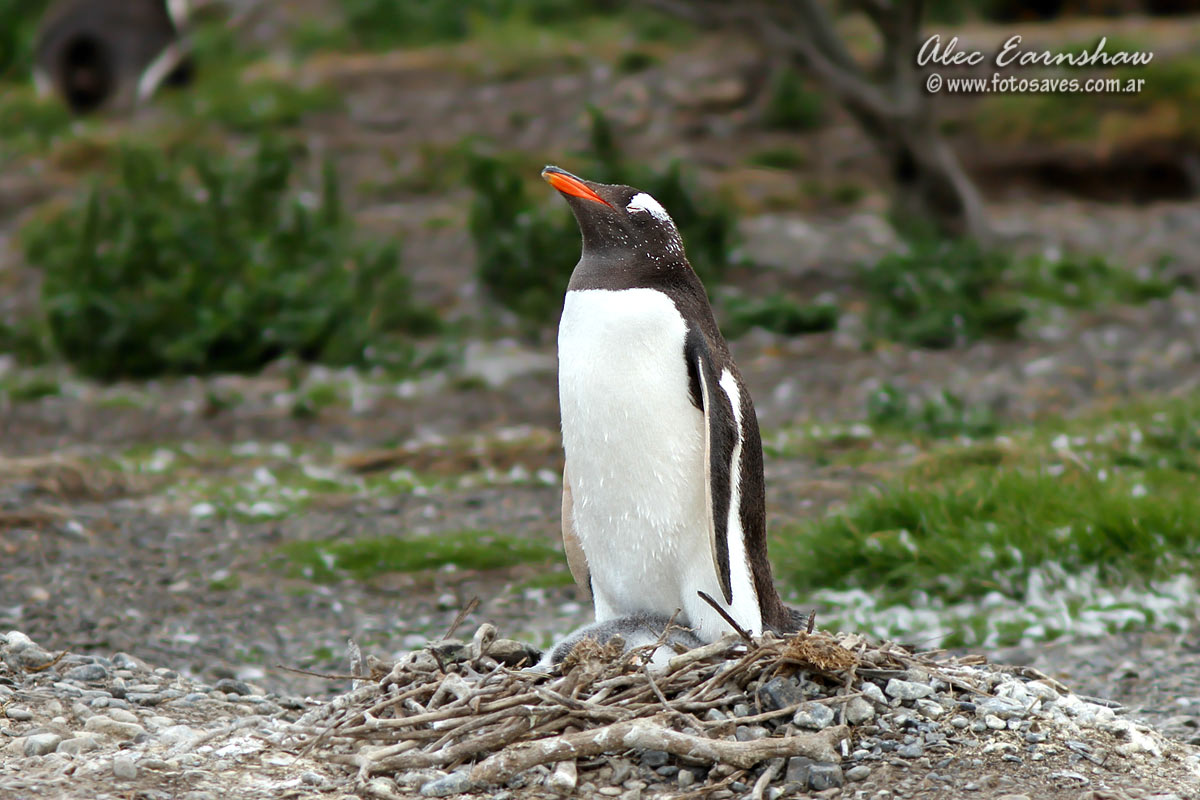
Pingüino
de Vincha
Pygoscelis papua Gentoo Penguin |
||
|
|
|
Volá con nosotros: unite a
Aves Argentinas (Asoc.
Ornitológica del Plata)
La ONG que protege a las aves silvestres
y sus ambientes naturales
Help by joining
Aves Argentinas, the argentinian
NGO for birding and bird conservation